


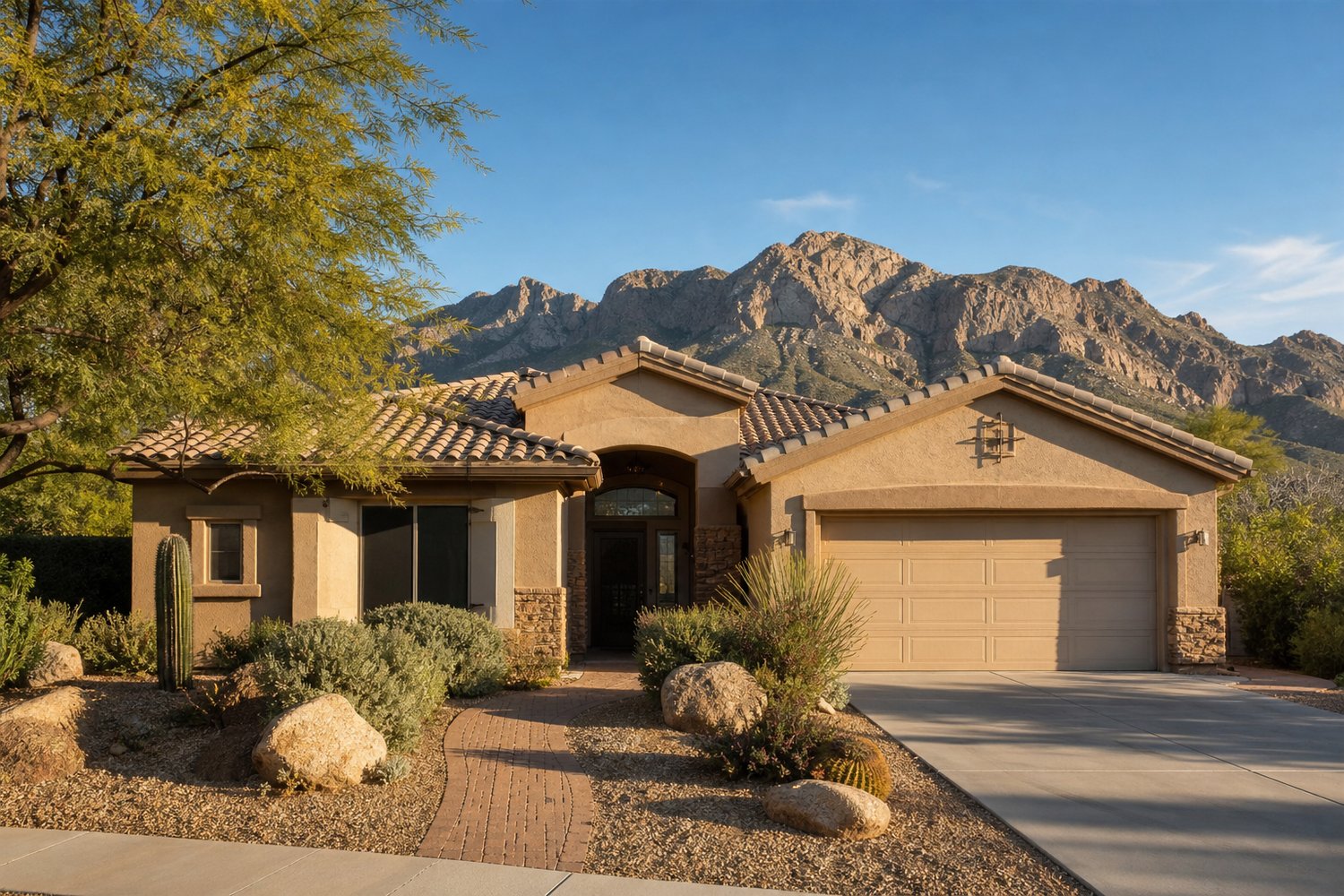
Find the cause first, then choose between repairing, offering a credit, or selling as-is. Buyers and lenders react less to the word "foundation" than to uncertainty, so reports, repair records, and a price built on real scope usually decide how smoothly the sale goes.
Selling a Tucson House With Foundation Problems
How do you sell a Tucson house with foundation or structural issues?
Find out what is actually wrong, then pick one of three paths: repair before listing, list with reports and a repair credit, or sell as-is at a price that reflects the uncertainty. A Tucson house with foundation or slab leak concerns sells best when the cause, the scope, and the paperwork are documented before buyers start asking questions.
Key Takeaways
- Recent local market data shows a median sale price of $358,000 for Tucson homes sold over roughly the last 90 days, which is the benchmark a structurally impaired home gets measured against.
- Those same recent sales went under contract in a median of 33 days from listing, so a home with an unexplained defect is competing against buyers who can move fast on cleaner options.
- A slab leak and foundation movement are different problems, and labeling both as a "foundation issue" in your listing file hurts you.
- A documented, permitted repair with warranties reads very differently to a buyer and lender than an unresolved crack pattern with no diagnosis.
- Financing, insurance, and credits are decided property by property, so no loan type automatically will or won't work.
What should I investigate before I price the house?
Investigate the cause and scope first. Pricing a structural concern before you know what it is means guessing, and buyers will price in the worst case.
Before you list a Tucson house with foundation concerns, I want you to know whether you're dealing with plumbing, soil movement, or true structural distress. I walk my clients through this before we ever talk about a list price.
Separate the plumbing from the structure
A slab leak can damage flooring, drywall, cabinets, and the soil under or beside a slab. It does not always mean the foundation has failed. Your listing file should keep these apart:
- Confirmed plumbing defects
- Moisture damage
- Soil movement
- Foundation distress
- Repairs already completed
For a suspected slab leak, a licensed plumber and leak-detection testing answer the first question. For cracking, sloping floors, or sticking doors, a qualified structural engineer evaluates cause, significance, and recommended scope.
Why an engineer and a contractor answer different questions
A repair contractor's proposal tells you how to fix something. An independent engineering opinion tells you what is wrong and how serious it is. Buyers and their lenders tend to trust the second one more, because the engineer has no repair to sell.
Build the paper trail before you market
Gather everything in one file:
- Inspection and engineering reports
- Leak-detection results and plumbing invoices
- Repair proposals, permits where required, and warranties
- Photos taken before and after work
- Engineer letters and any insurance correspondence
A buyer will evaluate the evidence for your specific property. A line that says the issue was "fixed" carries very little weight on its own.
Who handles permits where you live?
Confirm this before any work begins. A Tucson mailing address could sit inside the City of Tucson, unincorporated Pima County, or an incorporated town like Oro Valley or Marana, and each has its own building department. Ask which authority applies and whether structural, plumbing, excavation, repiping, or foundation work needs permits and inspections. Skipping permitted work can create a second problem on top of the first.
If your home was built before 1978 and repairs would disturb painted surfaces, federal lead-based paint rules may apply. Check the EPA's current requirements and ask your contractor about them before work starts.
Should I repair, offer a credit, or sell as-is?
It depends on how clear the diagnosis is, how much time you have, and whether you want to manage a repair project. All three paths can work. Here is how they compare.
| Path | Works best when | Main tradeoff | What buyers see |
|---|---|---|---|
| Repair before listing | The cause is clear and the scope is manageable | You manage the project and timeline before you can list | Reports, permits, final inspections, and warranties |
| List with reports and a credit | You have a diagnosis but want to avoid running the repair | Buyers may still negotiate the amount or scope | A known problem with a defined remedy |
| Sell as-is | You want a simpler exit and accept a narrower buyer pool | Buyers price in uncertainty, so reports matter even more | A property to evaluate, with inspection rights |
| Target buyers who can fund the work | The repair is significant and financing may be difficult | Fewer buyers, and a longer exposure period is possible | An opportunity priced for the work ahead |
Who pays for what, whether through repairs, credits, escrow holdbacks, or termination rights, is negotiable and contract-specific. Your escrow officer carries out what the contract says. The negotiation happens before that.
How do I price when the repair cost is uncertain?
Reduce the uncertainty first. Once you have an engineer's opinion or a written repair scope, the price conversation gets much more concrete. Pricing your home right from day one beats chasing the market down, and that matters even more with a structural question hanging over the listing. A price that starts too high invites weeks of silence, and buyers then wonder what's wrong with it.
I won't give you a blanket discount number here. No reliable Tucson study supports a standard percentage for slab leaks or foundation movement, and a portal "average" would mislead you. Your number comes from your home's condition, repair scope, and comparable sales, which is what a local market analysis is for.
What do I have to tell buyers?
Plan on disclosing what you know, including past repairs. Arizona's construction-defect statute, A.R.S. § 12-1366, sets out repair-or-replace procedures for certain construction-defect claims. It is not a rule that lets a seller stay quiet about a known foundation problem. "As-is" means you're unwilling to make specified repairs. It does not remove disclosure duties or inspection risk. For a legal question about your situation, talk with an Arizona real estate attorney.
What about homeowners insurance?
Coverage depends on your policy and on what caused the damage. Call your insurer before repair work starts, and keep all correspondence in your file. Don't assume a slab leak or foundation repair is covered, and don't assume it isn't.
How does a structural issue change buyers, lenders, and negotiation?
It narrows the pool and slows the process, mostly because of uncertainty. A buyer's agent, lender, appraiser, and inspector will all look at the file you hand them.
Start with the market you're in. Recent local market data for Tucson homes sold over roughly the last 90 days shows 2,067 closed sales and a median sale price of $358,000. Right now there are 3,315 homes for sale, and 913 new listings came on in the last 30 days. Buyers have choices. A Tucson house with foundation questions and no documentation gives them an easy reason to skip yours. An individual home's value still depends on condition, street, build year, and timing, so treat these as area-level benchmarks. For broader trends, the Tucson Association of REALTORS® posts monthly MLSSAZ statistics, including its October 2026 report and the Q3 2026 Southern Arizona Housing Brief. Those describe the overall market, not a defect discount.
Will a lender finance it?
It depends on the lender, the appraisal, and the inspection evidence. Conventional, FHA, VA, portfolio, and private lenders can apply different condition requirements. An appraiser who flags safety, soundness, or habitability concerns can stall a loan. A documented repair can help get past that. Every buyer should confirm with their own lender, and I won't tell you any loan type automatically will or won't work.
What happens when the buyer's inspection finds it?
The negotiation usually turns on what you've already documented. If you have an engineer's letter and repair records, you're answering questions. If you don't, the buyer is guessing, and guesses run high. I cover your options in my post on what Tucson sellers can do after a buyer's inspection. If a buyer wants to make an offer contingent on something else, I also walk sellers through whether to accept a contingent offer.
When buyers hold the cards, you'll feel it in the negotiation. My post on Tucson homes selling below asking and buyer leverage explains how that plays out.
What I'd do next
Get the diagnosis. Build the file. Then let's sit down and compare your paths against what similar homes are doing. Every situation is different, and the only way to know your real options is to run them with someone who knows this market. That is exactly the kind of question I walk my clients through before we list.
Want to see how I work with sellers? You can read my reviews on Zillow and Realtor.com.
FAQ
Should I repair a foundation problem before listing my Tucson house?
Not always. Repair first when the cause is clear and the scope is manageable, because documented, permitted work gives buyers confidence. If the repair is large or uncertain, listing with reports and a credit, or selling as-is, may fit better. I can help you compare the options for your property.
Can I sell a Tucson home with a slab leak or foundation movement as-is?
Yes, you can sell as-is, but expect a smaller buyer pool and more negotiation. "As-is" means you won't make specified repairs. It doesn't remove your disclosure obligations or the buyer's inspection rights.
Do I have to disclose a past foundation repair to a buyer in Arizona?
Plan on disclosing it. A past repair is a known condition, and the repair records, permits, and warranties usually work in your favor. Confirm the exact wording with me, and with an Arizona real estate attorney if you have a legal question.
Will a buyer's mortgage lender finance a Tucson house with foundation damage?
It depends on the lender, the appraisal, and the inspection evidence. Different loan programs apply different condition standards, so no loan type automatically will or won't work. The buyer should confirm with their own lender early.
Should I get a structural engineer's report before listing?
Often, yes, when the cause of cracking or movement is unclear. An independent engineer's opinion tells you what's wrong and how serious it is, and it gives buyers and lenders something firmer than a contractor's bid. The right step depends on your home, so let's talk it through.
Ready to talk through your options?
A structural issue changes the buyer pool, the financing picture, and the negotiation, but it doesn't have to stall your sale. Start with the facts, build the file, and price from there. If you want a plan for your specific property, get a free home valuation or start your home search, and let's talk.
Equal Housing Opportunity. Rebecca Maher, Associate Broker; Accredited Buyer's Representative (ABR), Seller Real Estate Specialist (SRS), Graduate Realtor Institute (GRI). Regulated by the Arizona Department of Real Estate. This article is general information, not legal, tax, or financial advice. Confirm your own numbers and situation with your escrow officer, tax advisor, or lender.